43 hours lost | $771 per driver | $74B nationally
Frustrated by daily gridlock on corridors like the 405, I‑5, I‑10, or I‑35? You’re not alone. In 2024, the typical U.S. driver lost 43 hours to congestion—about a full work week—costing $771 per driver and $74B nationally. Downtown trips are rising again, intensifying peak‑hour pressure and incident cascades. Sources: INRIX 2024, Scorecard, CNBC
The Concept
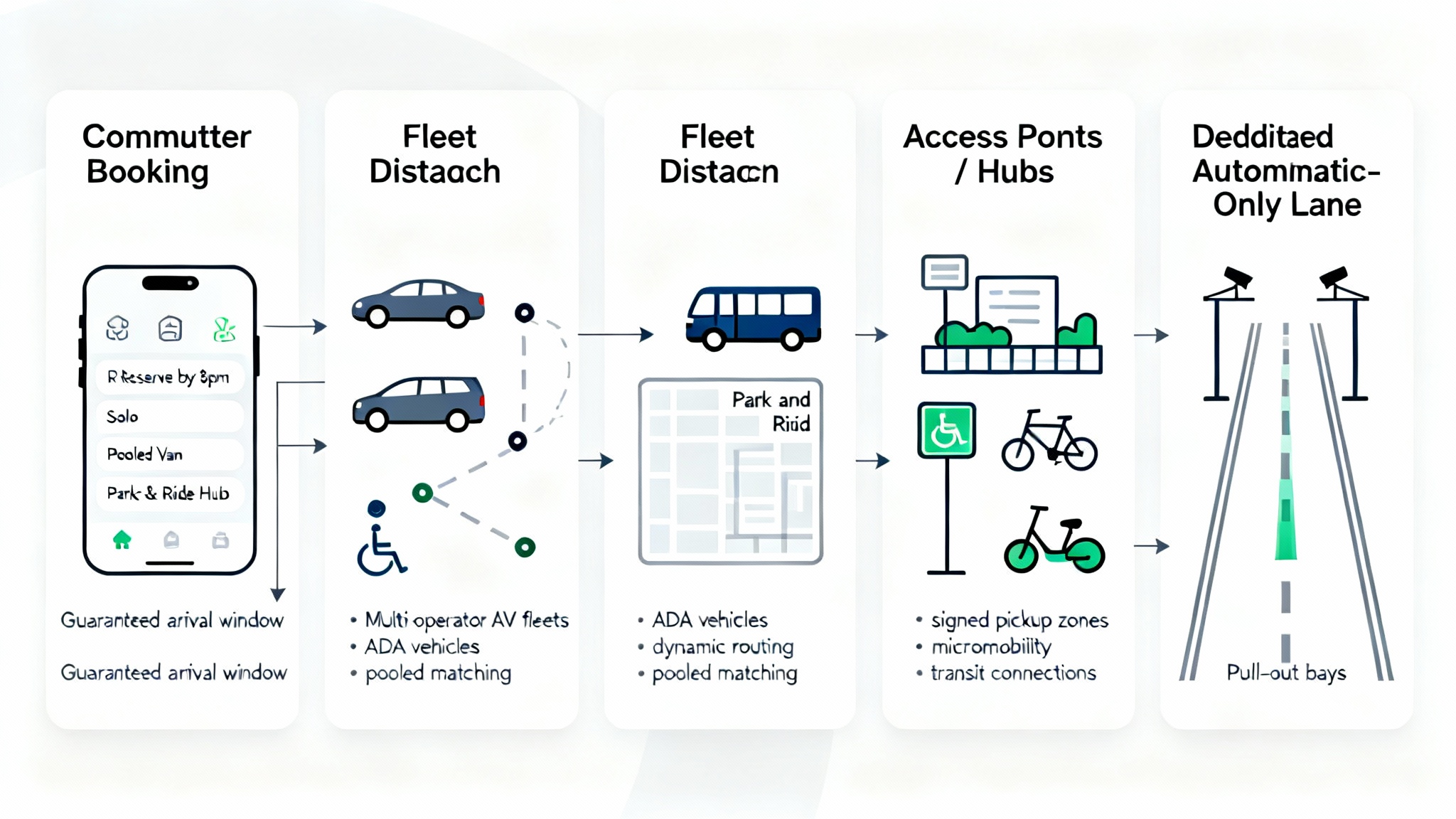
Create time‑boxed, camera‑enforced Autonomous‑Only lanes on key freeways during peak periods and pair them with an employer‑backed “RoboTaxi” reservation network. Any certified autonomous fleet can participate (technology‑agnostic: Waymo, Zoox, Tesla Robotaxi if/when operational).
What It Delivers
- Reliable commute windows (target >95% on‑time performance at peak)
- Fewer fender‑benders and incident ripple effects
- Higher person‑throughput per lane via pooled vans
- Easier access to downtown jobs, amenities, and nightlife
How It Works
- Reserve in the app by 8pm (solo, pooled van, or park‑and‑ride hub)
- Autonomous fleets handle pickup, freeway segment in the dedicated lane, and drop‑off
- Dynamic lane control signs enforce peak windows (e.g., 6:30–10am; 3:30–7pm)
- ADA vehicles and discounted fares ensure equity and accessibility
Why It’s Needed Now
- Americans lost 43 hours to traffic in 2024 (+1 vs. 2023) INRIX 2024
- NYC and Chicago drivers each lost 102 hours; LA drivers lost 88 INRIX 2024
- Downtown trips climbed sharply (e.g., +25% to Downtown Houston), boosting economic activity—and congestion INRIX 2024
Phased Implementation
Phase 0: Feasibility (90–120 days)
- Select 1–2 pilot corridors (10–15 miles)
- Draft policy: “Autonomous‑Only” definition, enforcement, incident playbooks
- Recruit anchor employers to pre‑purchase rides; set equity funds
Phase 1: Pilot (6–9 months)
- Convert one peak‑hour lane each direction; deploy dynamic signs and VMS
- Launch 200–500 AVs across operators; reservation app with SLAs
- KPIs: on‑time %, 90th/95th percentile travel time, minor crashes, throughput
Phase 2: Scale (Year 2)
- Add corridors; pooled vans; neighborhood hubs; transit pass integration
- Consider city‑street Autonomous‑Only lanes on key arterials feeding the freeway
Funding & Partners
- Employers: memberships and pre‑purchased commute credits
- Riders: tiered fares (solo vs. pooled) with low‑income discounts
- Public: safety/emissions/access grants; curb and hub improvements
- Partners: City/DOT, MTAs, multiple AV providers, employers, enforcement
Equity & Accessibility
- Discounted fares funded by employers and grants
- ADA‑equipped vehicles required in the fleet mix
- First/last‑mile coverage via hubs, shuttles, or micromobility
FAQs
- Doesn’t taking a lane make traffic worse?
Short‑term car‑throughput in mixed lanes may dip, but incident reduction and reliable pooled service increases person‑throughput and pulls riders from mixed traffic. Measure people per hour, not just cars per lane. - What about breakdowns and emergencies?
Pull‑outs, dynamic lane control, and coordinated AV behavior create controlled gaps for responders. - Is the tech ready?
Multiple autonomous services operate commercially or in pilots today. The program is operator‑agnostic and standards‑driven.
Call to Action
- I’m a City, State or Employer: Get Pilot Info
- I’m a Commuter: See How It Works
Metrics sourced from INRIX 2024 Global Traffic Scorecard, Scorecard, and CNBC coverage.